Is Science Fiction Better Off Without Torchships?
Apr. 29th, 2026 10:19 am![[personal profile]](https://www.dreamwidth.org/img/silk/identity/user.png) james_davis_nicoll
james_davis_nicoll
It's a case of limitations leading to more interesting plots and settings...
Is Science Fiction Better Off Without Torchships?
james_davis_nicolljames_davis_nicoll mrissa
Posting a bit early because I will be on vacation until it's time to do another one of these, and doing a whole month at once is too daunting.
K.J. Charles, Unfit to Print. Quite short mystery and m/m romance, with intense conversations between the characters about what kinds of pornography are and are not exploitative. Not going to be a favorite but interesting at what it's doing.
Agatha Christie, The Unexpected Guest. Kindle. I've read Agatha Christies before, and this sure is one. Absolutely chock full of loathsome people and not particularly great about disability. Jazz hands.
Peter Frankopan, The Silk Roads: A New History of the World. Kindle. I finished reading this just so I could complain about it accurately. My God what a terrible book. I wonder if I should be skeptical of all "new histories of the world." I suspect so. The thing is that he does such a completely terrible job of actually talking about the Silk Road that this is still largely a book about the British and American empires, but not a detailed accounting of their presence in the region. Partition of India? never met her. Chinese Communist Revolution and Cultural Revolution? how could that possibly matter, probably not worth the time. What. Sir. So many things I would like to know about Central Asia and still do not know, because Frankopan fundamentally does not care. Not at all recommended, I read it so you don't have to.
Alaya Dawn Johnson, Reconstruction: Stories. Kindle. Some really lovely and vividly written stories here. Not all to my taste, but it's rare that a collection is.
Ariel Kaplan, The Kingdom of Almonds. I really just love getting to write "the thrilling conclusion." I really do. Don't start here! This is the third book in its series, it is the thrilling conclusion! Start at the beginning, the beginning is still in print, and this is going to wrap things up nicely but you won't know how nicely if you don't read the whole thing.
E.C.R. Lorac, Death Came Softly and The Case in the Clinic. Kindle. Cromulent and satisfying Golden Age mysteries, with Golden Age assumptions but not as bad as in your average, oh, say...Agatha Christie.
Megan Marshall, Margaret Fuller: An American Life. Kindle. Well-done bio of a fascinating person, lots of what was going on with the Transcendentalists, early American feminism, loads of people you'll want to know about and then Fuller herself trying to fight her way through a system entirely not set up for people even remotely like her. She's part of how that changed, and she died a horrible death fairly early all things considered, and Marshall handles that reasonably as well.
David Thomas Moore, ed., Not So Stories. Kindle. The real stand-out piece for me in this book was Cassandra Khaw's, which opened the volume. What a banger of a story, and how perfectly she nailed the Kipling-but-modern brief. Worth the entire price of admission. (Okay, this was a library book, so my price of admission was free. Still, though.)
Anthony Price, The Hour of the Donkey, The Old Vengeful, and Gunner Kelly. Rereads. I am finding the middle of this series less compelling on reread than the early part. I don't remember the individual late volumes well enough to say whether it just went off a cliff never to return or whether it will bounce back a bit before the end. One of the problems is that I am just not that keen on his WWII stories (The Hour of the Donkey), and he keeps trying to write women and doing it badly. Anthony, apparently you spend all your time with plain women thinking how plain they are, but it turns out that many of them have other things on their mind, and thank God for that. Sigh.
Una L. Silberrad, Princess Puck. Kindle. What a weird title, it's a nickname that one character gives the protagonist and only he uses. This feels like...it feels like it's got the plot of a Victorian novel but even though Queen Victoria has just died five minutes ago, Silberrad can no longer really take some of the Victorian axioms quite seriously. She is very thoroughly an Edwardian at this point, in all the ways that felt modern and challenging at the time, and as much as I love a good Victorian novel, I'm all for it.
Maggie Smith, Good Bones. Kindle. I always feel odd when the best poems in a volume are the ones that got widespread reprinting, but I think that's the case here. And...good? that many people should have seen the best of what's in this? I guess?
D.E. Stevenson, Spring Magic. Kindle. This is such an interesting reminder that during WWII people were still writing upbeat contemporary novels sometimes. A young woman goes and finds a life by herself, away from the crushing control of her aunt, near a military outpost during World War II, and nearly all the other characters are highly involved with the war. But it doesn't have that fraught feeling that books with that plot would have if the war in question was over. We have to be sure that the proper characters will have a quite nice time, because the target readers are in the same situation and would prefer to think more about introducing small children to hermit crabs, figuring out something useful to do, and resolving romantic difficulties than about, hey, did you know that death is imminent? So. Possibly instructive for the present moment in some moods. Not a hugely important book, which is fine, they don't all have to be.
Anthony Trollope, The Eustace Diamonds. Kindle. Dischism is when the author's interiority intrudes on the narrative, and gosh were there several moments when I could see Trollope's own mental state peaking through regarding the titular objects. "She was tired of the Eustace diamonds." "He wished he had never heard of the Eustace diamonds." Shh, it's okay, Anthony, we get it. Because yes, this is not a title tossed off about something that's only peripheral to the story. The Eustace diamonds are absolutely central to the narrative. The thing that's fascinating to me is that the entire plot depends on a sensibility about heirloom and ownership that was as completely foreign to me as if the characters had been going into kemmer and acquiring gender. They are fighting about whether the titular diamonds are properly the property of a toddler or of the mother who has full physical custody of him. And Trollope makes that fight clear! It's just: wow okay what a world and what assumptions.
Darcie Wilde, The Secret of the Lost Pearls. Kindle. This is not the last in this series, but it's the last one I got a chance to read, and honestly I think it's the weakest of the lot. Wilde (Sarah Zettel) still and always has a very readable prose voice, but it felt a bit more scattered to me than the others--so if you're reading this series in order and wonder if it's going downhill, no, it's just that it's quite hard to keep the exact same level for a long series.
![[syndicated profile]](https://www.dreamwidth.org/img/silk/identity/feed.png) bruce_schneier_feed
bruce_schneier_feedThat’s a lot. No, it’s an extraordinary number:
Since February, the Firefox team has been working around the clock using frontier AI models to find and fix latent security vulnerabilities in the browser. We wrote previously about our collaboration with Anthropic to scan Firefox with Opus 4.6, which led to fixes for 22 security-sensitive bugs in Firefox 148.
As part of our continued collaboration with Anthropic, we had the opportunity to apply an early version of Claude Mythos Preview to Firefox. This week’s release of Firefox 150 includes fixes for 271 vulnerabilities identified during this initial evaluation.
As these capabilities reach the hands of more defenders, many other teams are now experiencing the same vertigo we did when the findings first came into focus. For a hardened target, just one such bug would have been red-alert in 2025, and so many at once makes you stop to wonder whether it’s even possible to keep up.
Our experience is a hopeful one for teams who shake off the vertigo and get to work. You may need to reprioritize everything else to bring relentless and single-minded focus to the task, but there is light at the end of the tunnel. We are extremely proud of how our team rose to meet this challenge, and others will too. Our work isn’t finished, but we’ve turned the corner and can glimpse a future much better than just keeping up. Defenders finally have a chance to win, decisively.
They’re right. Assuming the defenders can patch, and push those patches out to users quickly, this technology favors the defenders.
News article.
billroperelizilladavidlevine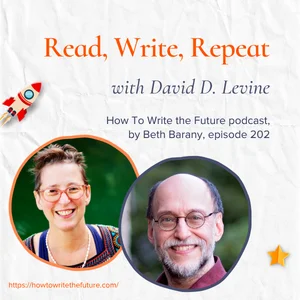 james_davis_nicoll
 lsandersonjames_davis_nicoll
 bruce_schneier_feed
Two weeks ago, Anthropic announced that its new model, Claude Mythos Preview, can autonomously find and weaponize software vulnerabilities, turning them into working exploits without expert guidance. These were vulnerabilities in key software like operating systems and internet infrastructure that thousands of software developers working on those systems failed to find. This capability will have major security implications, compromising the devices and services we use every day. As a result, Anthropic is not releasing the model to the general public, but instead to a limited number of companies.
The news rocked the internet security community. There were few details in Anthropic’s announcement, angering many observers. Some speculate that Anthropic doesn’t have the GPUs to run the thing, and that cybersecurity was the excuse to limit its release. Others argue Anthropic is holding to its AI safety mission. There’s hype and counterhype, reality and marketing. It’s a lot to sort out, even if you’re an expert.
We see Mythos as a real but incremental step, one in a long line of incremental steps. But even incremental steps can be important when we look at the big picture.
We’ve written about shifting baseline syndrome, a phenomenon that leads people—the public and experts alike—to discount massive long-term changes that are hidden in incremental steps. It has happened with online privacy, and it’s happening with AI. Even if the vulnerabilities found by Mythos could have been found using AI models from last month or last year, they couldn’t have been found by AI models from five years ago.
The Mythos announcement reminds us that AI has come a long way in just a few years: The baseline really has shifted. Finding vulnerabilities in source code is the type of task that today’s large language models excel at. Regardless of whether it happened last year or will happen next year, it’s been clear for a while this kind of capability was coming soon. The question is how we adapt to it.
We don’t believe that an AI that can hack autonomously will create permanent asymmetry between offense and defense; it’s likely to be more nuanced than that. Some vulnerabilities can be found, verified, and patched automatically. Some vulnerabilities will be hard to find but easy to verify and patch—consider generic cloud-hosted web applications built on standard software stacks, where updates can be deployed quickly. Still others will be easy to find (even without powerful AI) and relatively easy to verify, but harder or impossible to patch, such as IoT appliances and industrial equipment that are rarely updated or can’t be easily modified.
Then there are systems whose vulnerabilities will be easy to find in code but difficult to verify in practice. For example, complex distributed systems and cloud platforms can be composed of thousands of interacting services running in parallel, making it difficult to distinguish real vulnerabilities from false positives and to reliably reproduce them.
So we must separate the patchable from the unpatchable, and the easy to verify from the hard to verify. This taxonomy also provides us guidance for how to protect such systems in an era of powerful AI vulnerability-finding tools.
Unpatchable or hard to verify systems should be protected by wrapping them in more restrictive, tightly controlled layers. You want your fridge or thermostat or industrial control system behind a restrictive and constantly updated firewall, not freely talking to the internet.
Distributed systems that are fundamentally interconnected should be traceable and should follow the principle of least privilege, where each component has only the access it needs. These are bog-standard security ideas that we might have been tempted to throw out in the era of AI, but they’re still as relevant as ever.
This also raises the salience of best practices in software engineering. Automated, thorough, and continuous testing was always important. Now we can take this practice a step further and use defensive AI agents to test exploits against a real stack, over and over, until the false positives have been weeded out and the real vulnerabilities and fixes are confirmed. This kind of VulnOps is likely to become a standard part of the development process.
Documentation becomes more valuable, as it can guide an AI agent on a bug-finding mission just as it does developers. And following standard practices and using standard tools and libraries allows AI and engineers alike to recognize patterns more effectively, even in a world of individual and ephemeral instant software—code that can be generated and deployed on demand.
Will this favor offense or defense? The defense eventually, probably, especially in systems that are easy to patch and verify. Fortunately, that includes our phones, web browsers, and major internet services. But today’s cars, electrical transformers, fridges, and lampposts are connected to the internet. Legacy banking and airline systems are networked.
Not all of those are going to get patched as fast as needed, and we may see a few years of constant hacks until we arrive at a new normal: where verification is paramount and software is patched continuously.
This essay was written with Barath Raghavan, and originally appeared in IEEE Spectrum.
billroperranunculusjames_davis_nicoll
 selkilsandersonbruce_schneier_feed
Sent by a Spanish diplomat. Apparently people have been working on it since it was rediscovered in 1860.
billroperjames_davis_nicoll lsandersonjames_davis_nicoll - Is Science Fiction Better Off Without Torchships?james_davis_nicoll - Dragon Sword And Wind Child by Noriko Ogiwara (Translated by Cathy Hirano)mrissa - Books read, late Aprilbruce_schneier_feed - Claude Mythos Has Found 271 Zero-Days in Firefoxbillroper - Laptop Blueselizilla - Hypershell Exoskeletondavidlevine - How To Write the Future podcastjames_davis_nicoll - Bundle of Holding: Traveller Mercenaries (from 2023)lsanderson - 2026.04.28james_davis_nicoll - The Praxis (Dread Empire's Fall, volume 1) by Walter Jon Williamsbruce_schneier_feed - What Anthropic’s Mythos Means for the Future of Cybersecuritybillroper - A Mountain of Electronic Paperworkranunculus - Whew!james_davis_nicoll - Bundle of Holding: Traveller Update (from 2024) & Traveller Imperial Navy (New)selki - *Daughters of the Dust* and *Grass* Noteslsanderson - 2026.04.27bruce_schneier_feed - Medieval Encrypted Letter Decodedbillroper - Forms, Mr. Rico!james_davis_nicoll - Cherryh to retirelsanderson - 2026.04.26momijizukamorikrja
